
Relocating for a job can feel like standing at the edge of two worlds at once: the excitement of a new opportunity and the logistics-heavy reality of uprooting your life. A work-related move is not just about boxes and addresses. It is about timing, communication, benefits, expectations, and planning a transition that allows you to show up focused and confident on day one.
Whether you are moving across town for a promotion, across the state for a new role, or across the country for a career-defining opportunity, the key to a smooth transition is coordination. Coordinating with your employer, your household, and your moving professionals turns a potentially stressful process into a strategic, well-managed project.
This guide walks you through how to coordinate a job-related move from start to finish, including how to approach employer communication, understand relocation packages, plan logistics, and factor in remote or hybrid work arrangements. It is designed to help professionals move with clarity, control, and minimal disruption.
Start With the Conversation: Aligning With Your Employer Early
The most successful job-related moves begin with a clear, proactive conversation. Before you commit to dates or start packing, make sure you understand what your employer expects and what support is available.
Key questions to clarify early include:
- Your official start date and any flexibility around it
- Whether relocation assistance is offered
- Which expenses are covered and which are not
- Whether your role allows for temporary remote work during the transition
- Any documentation or approvals required for relocation benefits
Having these conversations early protects you from last-minute surprises and allows you to plan your move around real expectations rather than assumptions.
Tip: Follow verbal discussions with written confirmation. An email summary helps avoid misunderstandings and creates a clear reference point for both sides.
Understanding Relocation Packages: What Is Typically Included
Relocation packages vary widely depending on the company, role, and seniority level, but many include a combination of financial and logistical support designed to reduce the burden of moving for work.
Common relocation benefits may include:
- Moving cost reimbursement or direct payment to a moving company
- Temporary housing assistance
- Travel expenses for house-hunting trips
- Lease break or home sale assistance
- Storage solutions for short-term transitions
- Lump-sum relocation bonuses
Some employers offer structured relocation programs, while others provide a single stipend that allows you to manage expenses independently. Understanding the structure matters, because it impacts how you budget and plan.
Important detail: Ask whether reimbursements are taxable. In many cases, relocation benefits are considered taxable income, which can affect your financial planning.
Creating a Relocation Timeline That Works for Everyone
A job-related move often comes with a fixed start date, which means your timeline needs to work backward from that point. Creating a relocation timeline helps you coordinate your employer’s expectations with your personal logistics.
A realistic relocation timeline includes:
- Notice to your current landlord or preparation for home sale
- Scheduling professional movers
- Time for packing and inventory
- Utility transfers and address changes
- Travel days and buffer time
- Setup period before your first day of work
Building buffer days into your plan is critical. Moves rarely go perfectly on schedule, and arriving exhausted or unsettled can affect your performance during your first week.
Pro insight: Employers often appreciate employees who plan ahead. A well-structured timeline signals professionalism and reliability.
Choosing the Right Moving Strategy for a Work Relocation
Not all moves are equal, and job-related moves often involve tighter timelines and higher stakes. Choosing the right moving strategy is essential.
Consider the following factors:
- Distance of the move
- Complexity of your household
- Whether you are moving alone or with family
- The value and fragility of your belongings
- Storage needs between homes
Professional movers experienced in corporate and job-related relocations can manage logistics such as packing, labeling, inventory tracking, and coordinated delivery windows. This reduces downtime and allows you to focus on your role rather than the move itself.
If your employer requires specific documentation or proof of services for reimbursement, confirm that your moving company can provide detailed invoices and inventories.
Coordinating a Move When Remote or Hybrid Work Is Involved
Remote and hybrid work arrangements have changed how many professionals relocate. Some employees move first and transition into a new role remotely, while others negotiate temporary remote work to bridge the gap between locations.
If remote work is part of your transition:
- Clarify how long remote work is approved
- Confirm expectations around availability and time zones
- Ensure your new home setup supports productivity
- Plan your move to minimize disruptions to work hours
Reliable internet, a functional workspace, and a clear moving schedule are essential when working remotely during a relocation. Communicate your moving day and any potential downtime in advance to maintain trust and transparency.
Managing Family Considerations During a Job-Related Move
When a move involves partners, children, or pets, coordination becomes even more important. Employers increasingly recognize that family stability affects employee performance, and many relocation packages now account for this.
Important family-related considerations include:
- School enrollment timelines
- Childcare transitions
- Spouse or partner employment support
- Healthcare provider changes
- Pet transportation logistics
Open communication with your employer about family-related timing needs can lead to more realistic expectations and, in some cases, additional flexibility.
Budgeting Beyond the Relocation Package
Even generous relocation packages rarely cover every expense. Creating a comprehensive budget helps you avoid financial stress during the transition.
Expenses often overlooked include:
- Packing supplies not covered by movers
- Temporary storage extensions
- Utility deposits
- New furniture or appliances
- Cost-of-living differences
- Travel and meals during the move
Planning for these costs ahead of time keeps your focus where it belongs: on settling into your new role.
Preparing for Day One: Arriving Ready, Not Recovering
The goal of a work-related move is not just to arrive. It is to arrive ready.
Before your first day:
- Confirm your home essentials are accessible
- Set up your workspace
- Know your commute or daily routine
- Have professional attire unpacked
- Ensure personal documents are organized
A well-coordinated move allows you to step into your new position with confidence rather than fatigue.
Final Thoughts: Treat Your Move Like a Professional Project
Moving for work is an investment in your career. Treating it like a professional project, with planning, coordination, and the right support, transforms the experience from stressful to strategic.
By communicating clearly with your employer, understanding relocation benefits, choosing experienced moving professionals, and planning for both personal and professional needs, you set the stage for a smooth transition and a strong start.
A successful job-related move is not just about changing locations. It is about creating continuity, stability, and momentum at a pivotal moment in your career.
If you are preparing for a work-related move and want guidance on planning, timing, and execution, working with professionals who understand corporate and job-driven relocations can make all the difference.
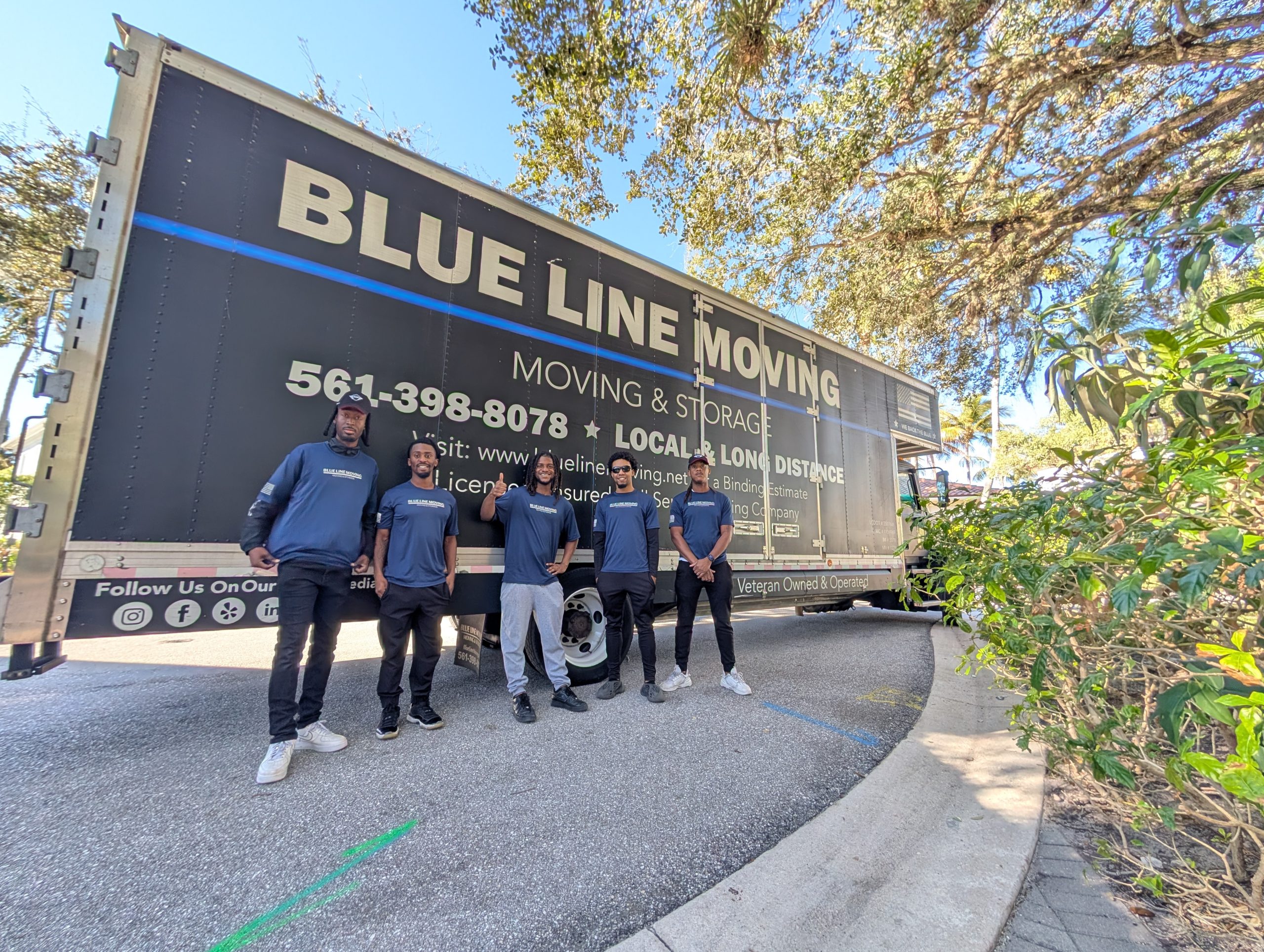
Hiring experienced movers makes a major difference. Blue Line Moving and Storage specializes in careful moves throughout Jupiter, Stuart, Boca Raton, Delray Beach, and surrounding areas.